
Care Enough to Care
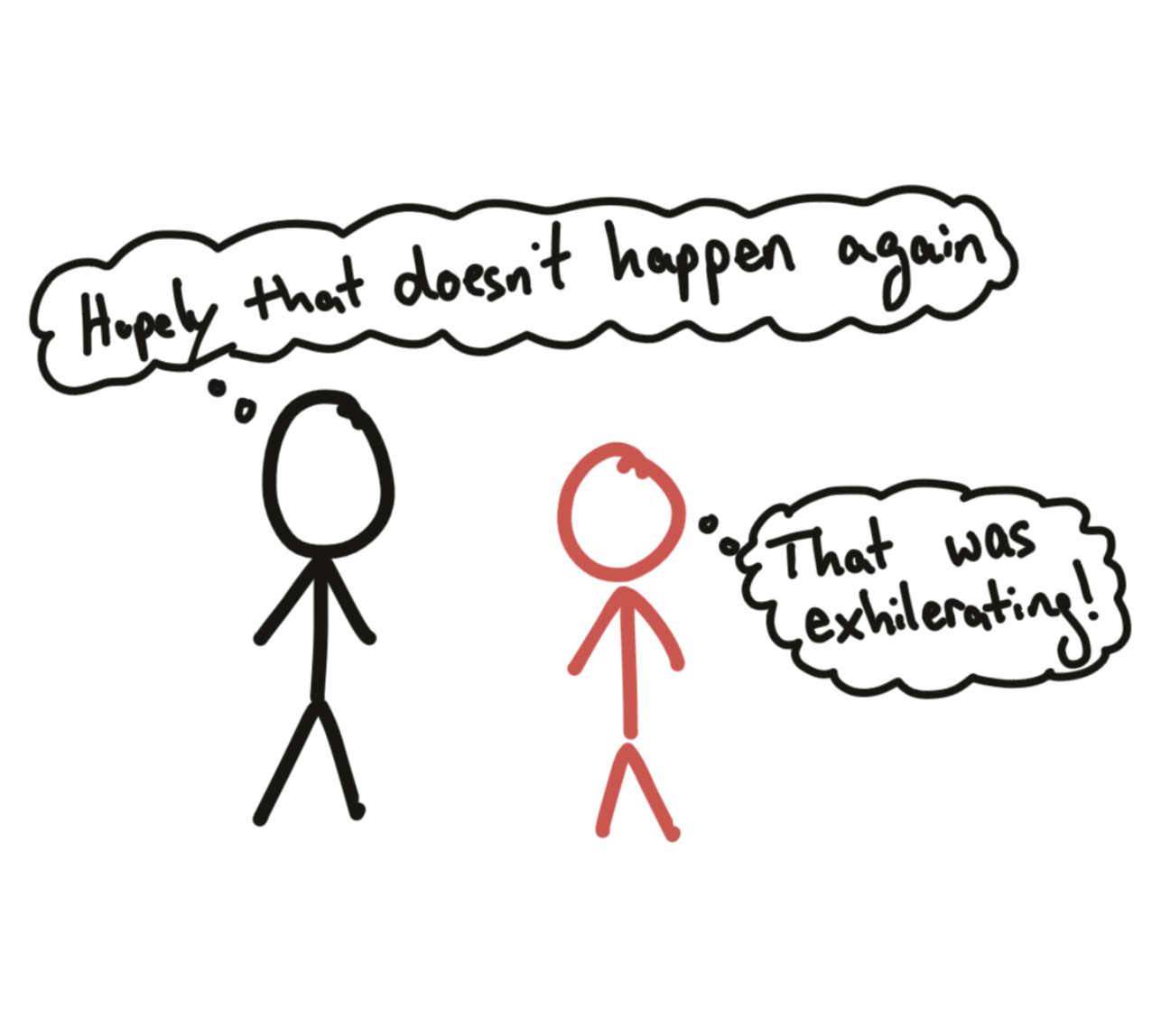
People struggle to correct each other’s behavior, even when that behavior is actively hurting another person, and especially when that behavior hurts only them–that “suck it up and hope it doesn’t happen again” mentality.
But why?
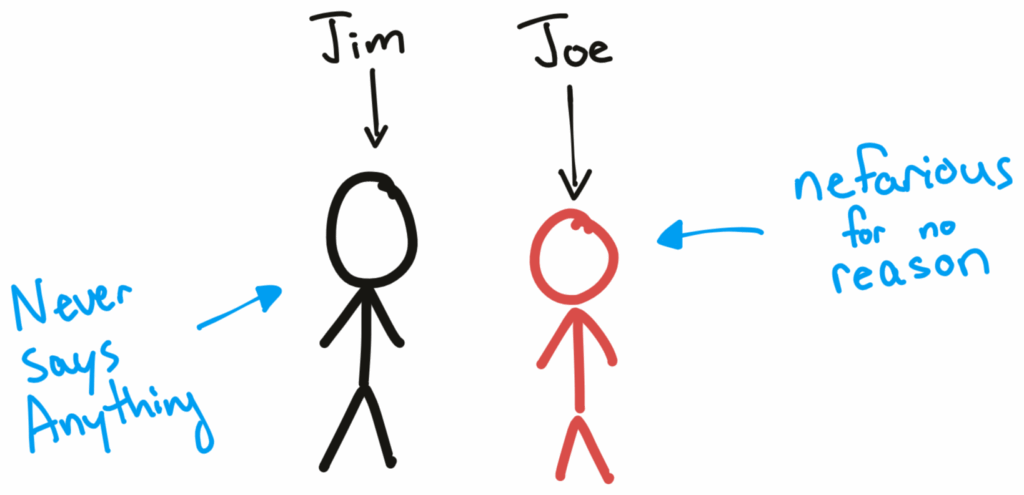
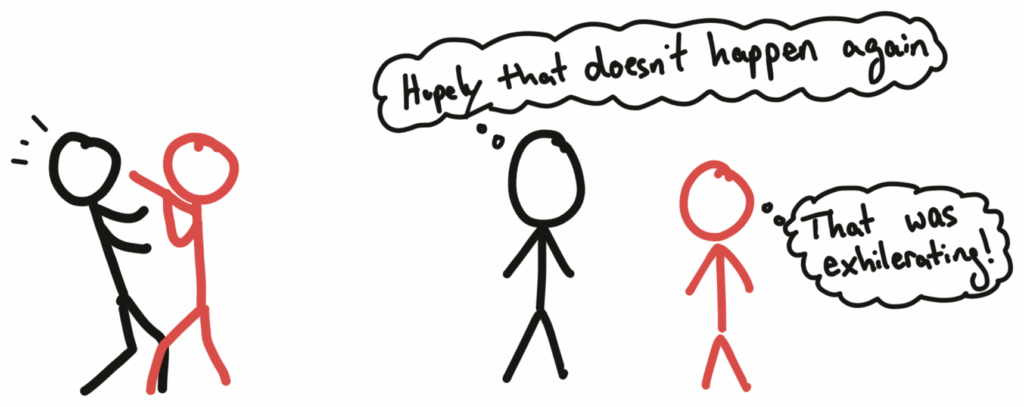
Thoughts on why Jim might struggle to say something to Joe.
- Jim knows the gist of what he wants to say but not how to say it. The right thing done the wrong way is worse than staying silent.
- Is that true? Is that true in all cases?
- Jim’s worried about blowing it out of proportion. He doesn’t want to make a big deal out of a little thing. Don’t be that guy, right? Don’t escalate too soon, right?
- Jim’s got so much he’s messed up on. He can’t say anything. That’d be hypocritical, right? That’d be judgmental, eh?
- Joe’s behavior only affects Jim, so why not suck it up, forgive and forget, and hope it doesn’t happen again.
- Jim is worried he’s actually wrong and it’s his own misperception. The whole thing could then turn on him and be socially devastating.
- Joe’s life sucks, so I should give him a pass.
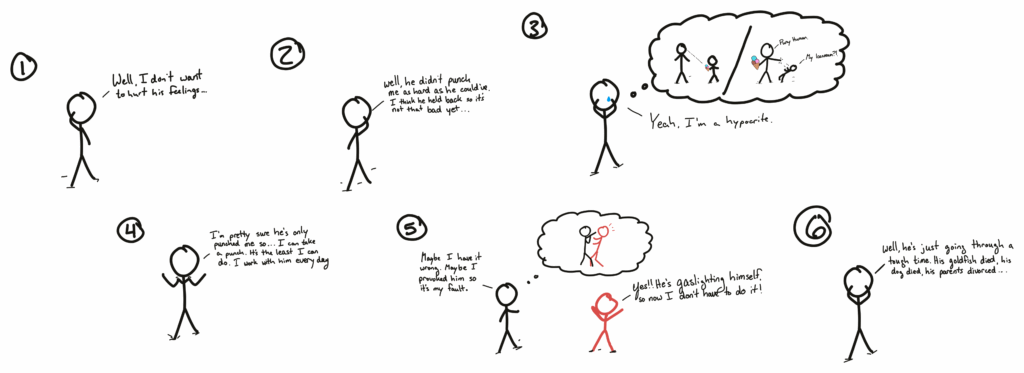
All of those thoughts aside—if you care, you try. If you care, you’re willing to risk being wrong in the attempt to make them a better man or woman. Plus, you might have it wrong, so have a conversation with them.
My recommendation.
State the facts, tell the truth. —Alex Hormozi
Whenever someone acts to a standard less than they are capable of, state the facts of what they did and tell them the truth. When people make a values violation—whether that’s society’s, the company’s, or your own values—then you should say something and have that one-on-one.
So, let me lay it out like this: If the facts of the situation find them guilty, then them’s the facts. You can forgive someone and still hold them accountable for their actions.
Disciplining them is not just about them. The community also needs to see that wrongful behavior is being addressed and that there is a standard being upheld. There is safety in knowing that behavior will be corrected. That’s a public redeclaration of values, and I guarantee people want to see that.
Should you not know what to say, give yourself the option of just saying messing it up. Expect to ‘get it wrong’ several times as you build the skill of holding others accountable. Your phrase-ologies and personal schticks will solidify over time as you try. Making the attempt is what’s essential—in spite of whatever you emotions may be.
Fear Interfering
Courage is not the absence of fear but acting despite it. —M. Scott Peck
Now, let’s talk feelings.
Your feelings can be flippant. Don’t rely on them to do the right thing. Acknowledge the fear if it exists and put it into words. What is the worst thing that could happen to you? Is the fear rooted in social blowback, or physical violence, or past trauma or about causing them unnecessary pain? Back track your emotions and see what belief or story they are rooted to.
Regardless of the emotional processing you do, the emotions may remain.
Those emotions can weaken your case if you go to your boss or HR and appear to be “letting your emotions get the best of you” and are “no longer seeing things objectively”. Coming across plain and direct is powerful.
Some examples
- Repeated, unwanted comments: “Joe, bro, you’ve got to stop calling me hot.”
- Dodging responsibilities: “Joe— you’re complainin’ about how exhausting this work is. Are you aware that you haven’t actually accomplished anything for months?!”
- Inappropriate humor: “Joe, your ‘foot pics monthly-calendar’ is making everyone uncomfortable.”
- Disparaging comments: “Joe!! You can’t say, ‘I can tell’, in response to fat people sayin’ they’re hungry.”
- Intimidation, threats, or blackmail: “JOSEPH. Maybe I’m wrong, but I don’t think touchin’ your lunch in the fridge warrants slashin’ my tires.”
Going to HR…
Before going to HR, it is best to try having a one-on-one with your Joe first. Having the private one-on-one is a thing of mutual respect for them, and it allows misperceptions about the situation to be addressed before you escalate the issue to your boss or HR. No one wants to be the office drama queen.
However, some situations are obvious and need to be addressed immediately. For example, if a male coworker making moves on a female coworker who is uninterested and getting uncomfortable, that needs to be nipped in the bud. If you are concerned for your own or others’ safety, go straight to the boss.
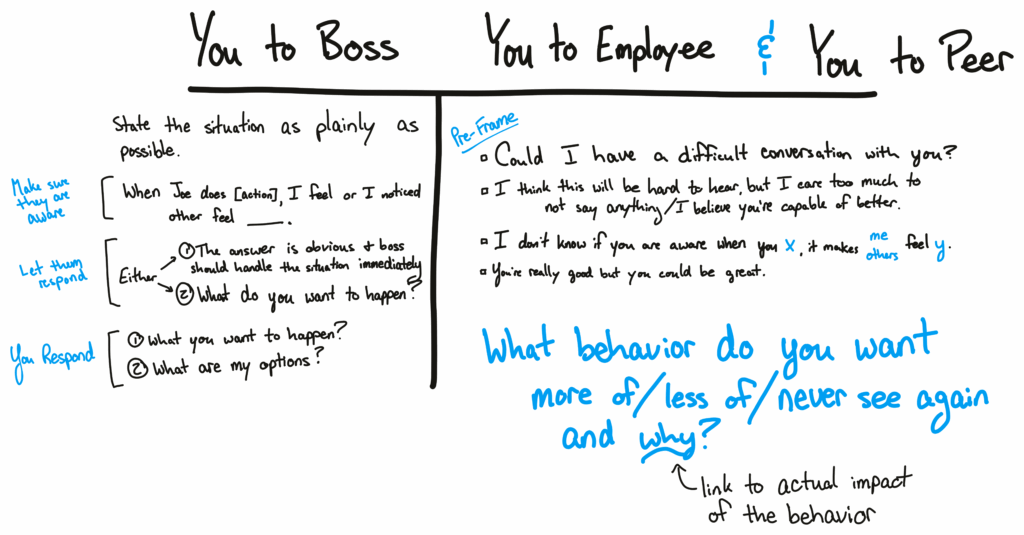
Tell your boss the facts of what Joe did and what you want to happen. It can look like, “I want x, y, z behavior to stop. This is what happened [insert specific actions, words, and behaviors here] and this is what I want to happen.” If you don’t know what you want, ask for what your options are. Know your non-negotiables.
Here’s what I think through the tact of these conversations between you to your boss, you to an employee, and you to a peer.
Final word.
An area where I’ve seen people especially struggle is when it comes to sexual harassment and assault. I believe people especially struggle here because they are worried they’re blowing the situation out of proportion. And since they were the only one affected, they should forget about it. Move on with life, you know?
So this final word is to try to help those people who are stuck in that gray zone of not knowing what to do and are concerned about accidentally escalating a situation. They could end someone’s career after all.
When it comes to whether to report a case of sexual harassment—which is inherently more of a gray zone—my recommendation is to lay out the facts of what was said and what was done. Jim said these exact words…, it made me feel…, Jim then grabbed my hand or leaned closer in what I believe was an attempt to kiss me. Something like that.
Note: For the report to HR or the authorities, stating the facts as clearly as possible makes it easier for them to act. List objectively what took place step-by-step and share that. Clarity is king when reporting.
If it is safe to do so, I’d encourage you to have the one-on-one first in the cases of sexual harassment. This gives them the opportunity to fix themselves, especially if there’s a chance they were completely unaware and struggle to read social cues. Some people won’t figure out they’re acting weird until someone says, “Bro—don’t do that.” How else were they going to figure it out?
However, if you do not feel safe enough for the one-on-one, then feel free to escalate immediately to your boss or HR. Know that HR is likely to take the issue straight to your boss to see if they’re aware of it and doing anything about it. Thus, you can sometimes get the situation addressed sooner by going to your boss first.
Should HR state the facts aren’t enough to take action, then ask questions to get an understanding of what would be. Then you know when to report next. In the meantime, keep writing down questionable situations.
Are You Being A Snitch?
I think socially, people are more likely to call you a snitch or think less of you when you haven’t given the other person a “fair” chance to correct their behavior.
Or it appears that your emotions blurred the facts of the situation causing unnecessary risk to someone’s reputation and career.
If I was unsure, I would seek out my boss or HR and say, “I’m looking for counsel/advice on a situation. Could I tell you what happened and get your opinion on it?” Then, state the facts, tell the truth, get their opinion.
Next, “This has made me feel x,y,z and I am considering reporting it, but I’m concerned I may being making too much out of the situation.” At that point, they will advise you based on the facts, and tell you what your options are. This has resolved a lot of my own personal turmoil when it comes to ambiguous situations regarding peers, employees, or leadership.
Remember, if you feel guilty for the punishments that come their way, know that if the facts find them guilty, the consequences are what they have earned, what they have bought with the choices they made.
Action Item:
Big idea: When making a correction to someone’s behavior, the question is, “What is the right amount of discomfort/pain that would change the behavior for the better?”
- Pick someone you genuinely care about. What does a better version of them do, say, or behave like? Find the time to share.
- Is there anyone with whom drawing some boundaries with could vastly improve your life? Figure out what those boundaries are and shoot your shot at having that conversation.
Good luck out there.
Happy journey’ing 🤙