
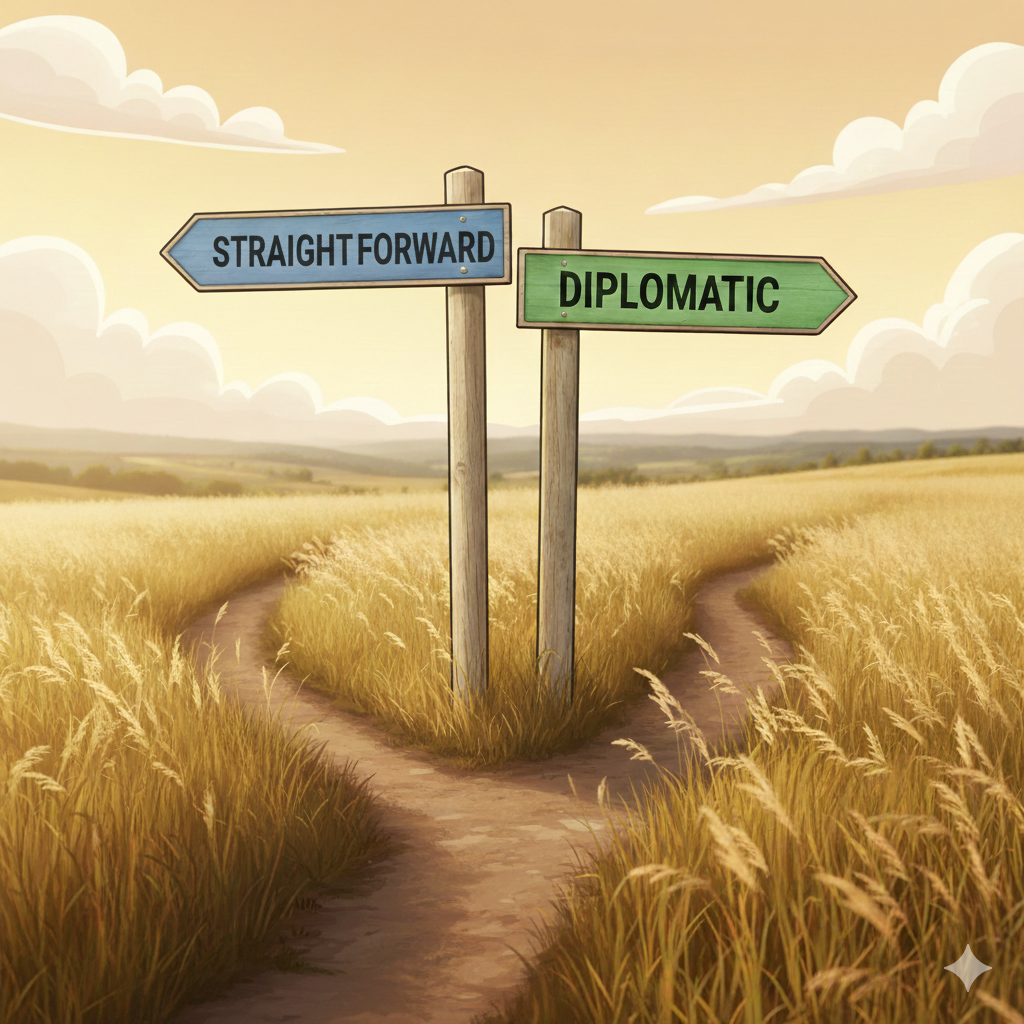
People say “blunt.” I say I’m straightforward. I say I’m candid.
“Blunt” is what people call you when they’re put off by what you said. “Candid” is what they say once they appreciate the honesty.
I prefer blunt people. I prefer candor.
My number one reason: you don’t have to guess what they’re thinking. They tell you if they don’t like something you did. They say something when they think you’re wrong.
Oh, what a beautiful thing!
If you’re surrounded by “yes men and women,” you’re likely missing critical feedback that would make the company better. When subordinates prioritize pleasing you, both you and the team suffer.
The people I value the most are often the ones willing to hurt my feelings.
So What? Where Does This Apply For You?
Where I think people generally need to communicate more is in their closest friendship—especially, with a significant other. People carry lots of rules with them about what they can and they can’t say to their partner, but I think that prevents them from expressing fears, concerns, and genuine wants sometimes.
I’d go as far as this: if a partner is finding themselves with lust for another woman, then they should ask themselves why? What is it that they think this person might be able to provide for them that their wife is currently not providing for them?
If they figure out the answer to that question, they can make that request to their wife. They can also talk about why they think that emotional desire currently isn’t being met, or their desire for connection is not being satisfied. No mindreading for anyone. Just put it out there.
Importantly, when you make a request, you must take into account that “no” might be their answer. If “no” wasn’t an option, that is a demand. No one likes demands. They feel manipulative. They make you want to resist.
I do not think that any couple should count on mind-reading. Instead, although it is not sexy, I think the couple should openly ask for things. It takes away a lot of the mystery that Hollywood highlights as essential, but that mystery can come later once you’ve both figured out each other’s nonverbals for “that pissed me off”, “I don’t like it when you do that”, “I wish you would ask me about you day.”
I’d say, expect that everyone comes into the relationship largely untrained. Expect that they don’t fully know what it looks like when you need a hug, when you need to cry, when you need to be left alone. Teach them!
Yes, it will diminish the value of the first hug they give you because you had to ask for it. That hurts. The hope is that they remember what you taught them, so the second or third time you are in the same situation, they know what it looks like and they know how you want them to respond.
It feels goofy, but I have said to people, and I have been asked, “Can I give you a hug?”
I’ve seen more women than men have this approach, but it’s nice because it acknowledges that they see you are in pain and shows that they want to do something about it—give you a hug—if that is something you’d want.
Relationally, I think there should be nothing you are unwilling to talk about. If you are, then explore that. What is the concern or discomfort in that area? Walk that emotional response down to its root.
Personal Example
Here’s a personal example of something my partner and I have discussed. She loves physical touch and getting to be close with me. My energy and desire for physical touch often runs out before hers does. What do I do when we are sitting together, and I realize I am ready to sit by myself?
- Say nothing and hopefully it doesn’t build to any real tension for me
- Say something and accidentally leave her feeling rejected?
- Say something and hopefully all goes well?
- Say something later?
Honestly, worst case scenario is saying something to her like “stop touching me,” and I leave her feeling rejected. Best to avoid that.
Perhaps, I say nothing. It’s too small of a thing to mention. Not worth it. Don’t make something out of this. Other men want this exact situation, so I should count myself lucky and figure out how to like it (?)
I’m a big say what you feel kind of guy but choose your words well.
But…
I choose option number one. I didn’t want to kill the moment for her and it meant a lot to her. I wanted to try and get myself to the same point or just be okay letting this be a time for her.
She hates that.
I later talked with her about it. I asked, “When I am ready for less touch, how can I ask for that?” Obviously, not wanting her to feel rejected and wanting to communicate how I felt in a given moment. No need to suppress my emotions all the time.
We came up with some verbals and nonverbals for such a scenario. I could take her hand, squeeze it once, then set it down next to me. I could say, “I’m ready for a touch break.”
Haha I know these sound goofy, but it works for us.
If my emotions or hers change in a moment, I want to be able to express that so we can co-create the next best moment together. If I am not sharing, what is going on in my internal world, and she’s having to mind-read, our next moment could be less than ideal. Improv is fun and all, but not 24/7.
Where I Think This Is Most Useful?
I think people undercommunicate in their friendships about what they think or feel because they are worried it will hurt their friendship. If you ask your questions from a place of care, then speak your mind. Share your thoughts, gently when needed, and be okay with them disagreeing.
Don’t assume people know what you want or wish for. Just tell them. Makes life a lot simpler.
Final plug. If you have a thought or feedback that you think would make someone better or more of the man/woman they want to be, then share it with them. It may initially hurt them, that’s okay. In the long run, the friends willing to hurt them for the sake of a better them will become their closest friends.
3 responses to “Being Blunt *cough* Straightforward is a Superpower”
“Improv is fun and all, but not 24/7.” 👏🏼 Relationship Facts
That last section is gooood.
Relatable: “I think people under communicate in their friendships about what they think or feel because they are worried it will hurt their friendship.”
I can definitely improve speaking up more and sharing my feedback/opinion if it is coming from a place of care.
Do you think it is important to ask for permission to share such advice before sharing so that you do not give unsolicited advice? Or even ask ” hey I have some thoughts about XYZ, is now a good time for me to share this?” Or would you say that is an expectation in close relationships and you can just be straightforward whenever and about whatever?
If the conversation is particularly difficult, then I would check in with them to see if they were cool having that conversation then and there.
And I would say the closer the relationship, the more of an expectation there is that you share your thoughts with them and be straightforward. Best friends let you know when they think you’re messed up!